The Danube Under Pressure
Europe's busiest river reveals how fragile its industrial supply chains really are.
Read the perspectiveCould the EV transition unintentionally create a two-tier charging society?
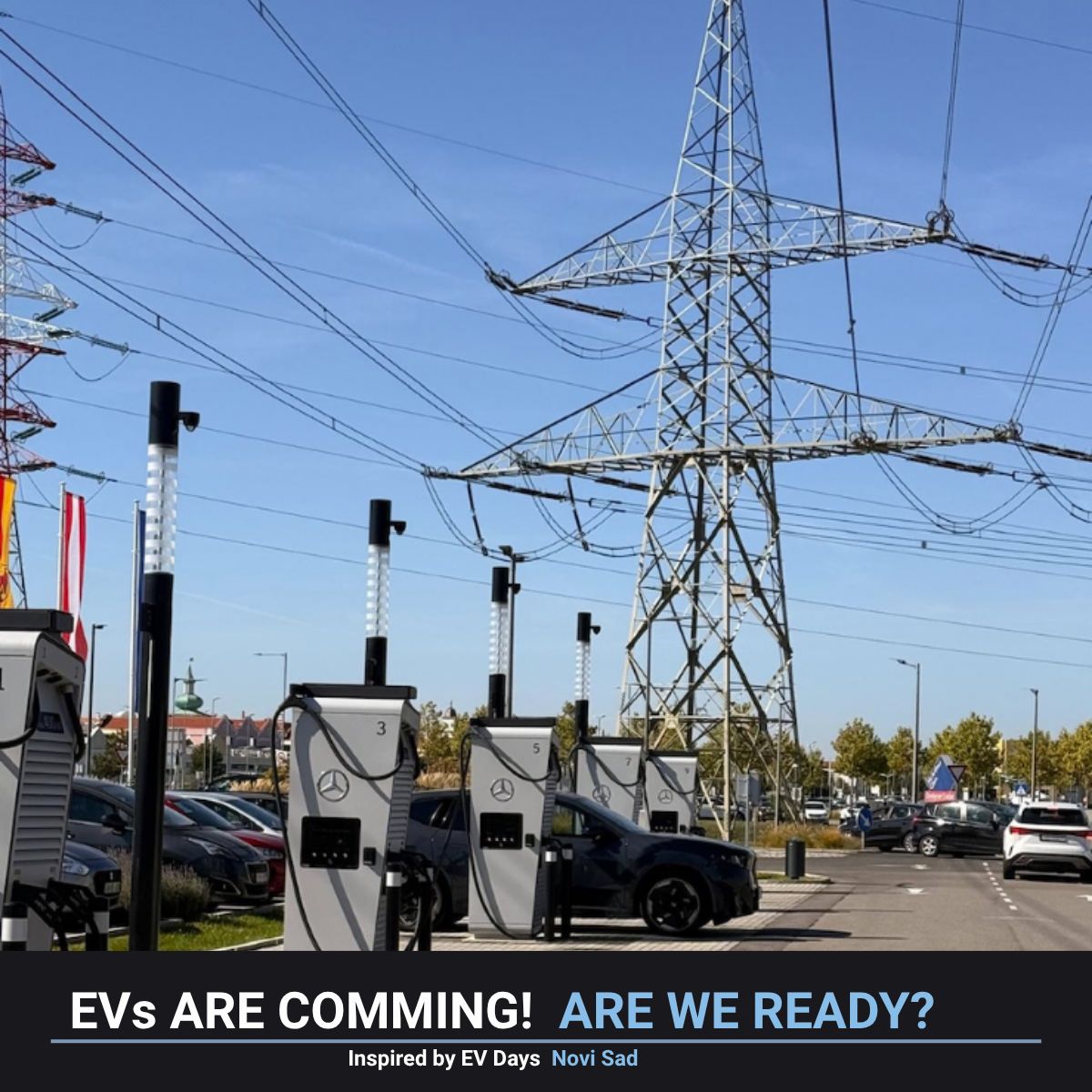
As an engineer, I naturally tend to look at e-mobility through technical lens. That is why I always appreciate discussions that take me beyond it. The recent EV Days panel in Novi Sad did exactly that. The e-mobility transition is already a reality. But it is no longer only about replacing combustion engines with electric motors. It is increasingly about what happens around the vehicle. Triggered by the discussion, a question popped into my mind that I had never really thought about before. A homeowner may charge cheaply and comfortably at home, potentially using rooftop solar. Someone living in a high-rise apartment may have no such option and depend on more expensive public charging.
Could the EV transition unintentionally create a two-tier charging society?
This question may be particularly relevant in Eastern Europe, where many people live in apartment buildings and the infrastructure needed for widespread public charging is still developing. For Serbia and much of Eastern Europe, e-mobility could create new businesses, technologies and jobs. But it will also require major investment in charging, energy and urban infrastructure — and not every region will be able to move at the same speed.
EVs are coming! The bigger question may be whether the world around them is ready.
An independent publication. Views expressed are personal.